
The Great Tales
Myth, Legend, Christ
Myth, legend, and story communicate history, meaning, identity, and the highest truths about both the seen and unseen world. Both ancient Israel and the Christian Church recorded, preserved, rewrote, commented on, and found edification in the great, epic tales (as well as the lesser ones), whether they originated inside or outside the people of God. Join Fr. Andrew Stephen Damick and Dcn. Seraphim Richard Rohlin as together they read the great tales.
Music attribution:
Cold Journey by Alexander Nakarada (www.creatorchords.com)
Licensed under Creative Commons BY Attribution 4.0 License
https://creativecommons.org/licenses/by/4.0/
Support podcasts like this and more!
Donate Now
Thursday, April 2, 2026
Three Bardic Beatdowns
Our hosts recap three legendary poetic showdowns: Väinämöinen vs. Joukahainen in the Kalevala, Homer vs. Hesiod in ancient Greece, and Taliesin vs. an entire court full of Celtic bards. Find out who's bussin' and who's suss, who was spitting fire and who got fired.
Thursday, March 19, 2026
Burgundians Behaving Badly
We continue #HoaryNorthernWinter with a turn toward the German tellings of the Volsung story, the Nibelungenlied, and Þiðreks saga. Rather than being translations of the Norse material, these versions transform the story and characters and also tell some tales of their own.
Thursday, March 5, 2026
The Scourge of God
#HoaryNorthernWinter continues with the final showdown with the Huns and the fall of the House of the Gjukings. While we're on the subject, we'll look more deeply into the ancient conflict with the Huns that scarred the pysche of Germanic storytellers for a thousand years.
Thursday, February 26, 2026
The Quarrel of the Queens
#HoaryNorthernWinter continues as we come to one of the most famous scenes in the Volsunga Saga: the Quarrel of the Queens, the moment when everything breaks for Sigurd and the Gjukings. Atilla the Hun makes an appearance.
Thursday, February 12, 2026
The Cup of the Gjukings
We continue #HoaryNorthernWinter as we resume the Volsunga Saga and find out what happens to our great dragon-slaying hero when he comes to the Hall of the Gjukings and is offered certain magical draughts...
 Fr. Andrew Stephen Damick
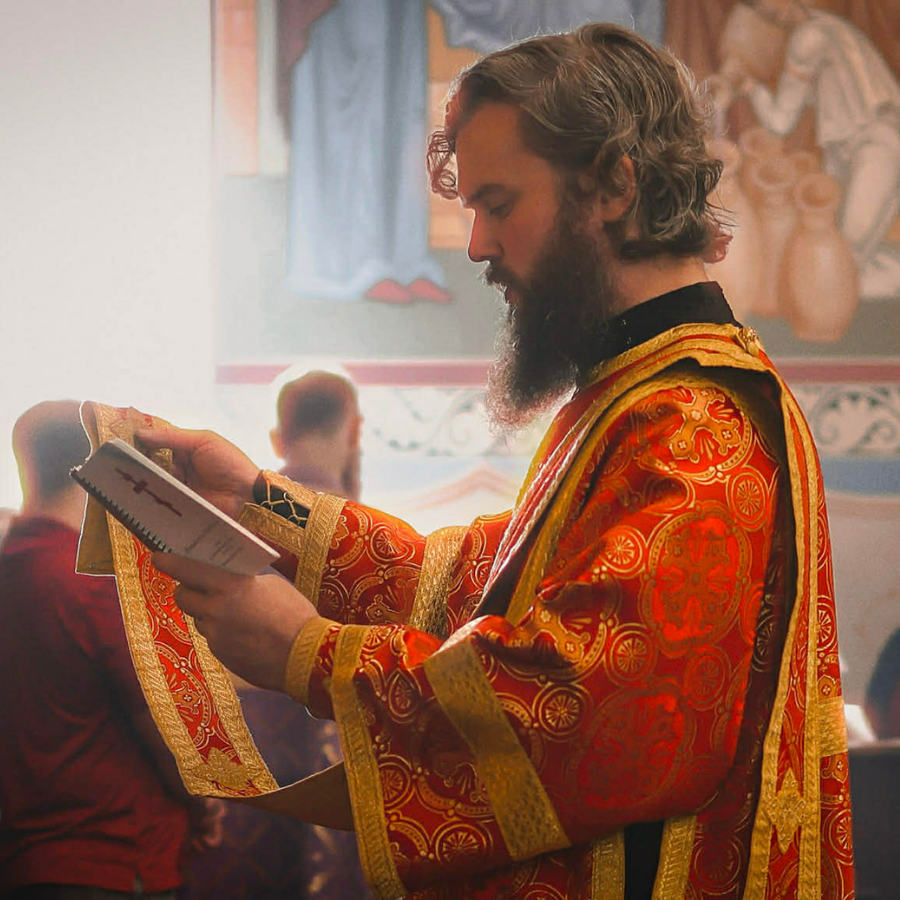 Dcn. Seraphim Richard Rohlin