How to Be an Orthodox Christian
Prayer: The First Wing of the Christian Life
Beginning with the desert story of Abba Macarius — "Lord, as You will, and as You know, have mercy" — this episode grounds Orthodox prayer in the simple act of turning toward God and asking for mercy. Dcn Seraphim moves from the definition of prayer as communion (Evagrius, Gregory Palamas, Anthony Bloom) into the Sermon on the Mount, walking phrase by phrase through the Lord's Prayer with the help of Chrysostom, Cyprian, Theophylact, Maximus, and Gregory of Nyssa. He then lays out the daily cycle of the Church and introduces a beginner's prayer rule as a trellis on which a prayer life can grow. The episode concludes with a demonstration of the rule at the icon corner and the encouragement that dryness in prayer is often the sign that God is drawing us deeper.
PRAYER LESSON OUTLINE:
https://drive.google.com/file/d/1wY5vsnQr2ND9GciZbsfV4b148k7qzlUp/view?usp=sharing
SAMPLE PRAYER RULE:
https://docs.google.com/document/d/1d2WdXDHC7_-Uw0oYDtEWlsXJ4fwYSn_Y/edit?usp=sharing&ouid=113635573846427389195&rtpof=true&sd=true
Monday, May 4, 2026
68 mins
Listen now
Download audio
Download video
Support podcasts like this and more!
Donate Now
Transcript
Transcripts can be commissioned for most episodes at $1.25 per audio minute. Sponsor this episode’s transcript to help make it available to everyone.
Sponsor this transcriptAbout
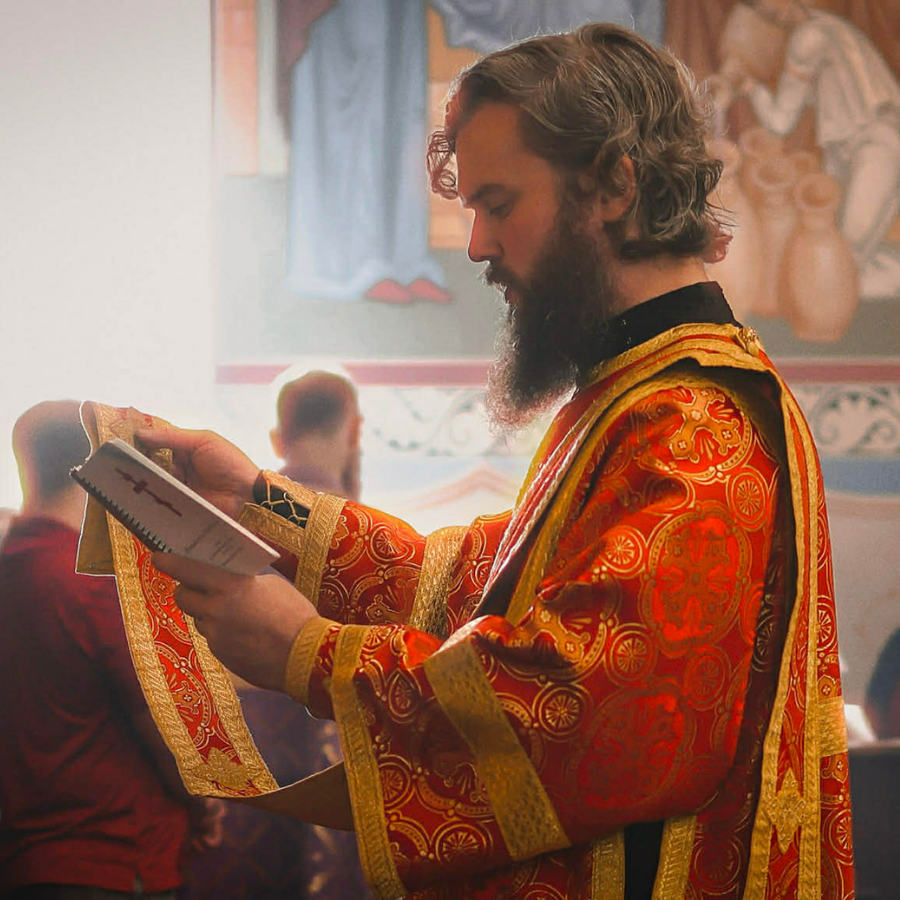
Deacon Seraphim Richard Rohlin presents in podcast form many of the catechetical lessons, materials, and videos that he uses as a catechist at the St. Seraphim Cathedral in Dallas, Texas. This series is an introduction to catechism for the use and benefit of Orthodox Christian parishes around the world, and for people who are interested in becoming Orthodox Christians, who want to learn more about the Faith, or go deeper into the same Faith that they have already received. It is not intended to substitute for or replace instruction in the Faith from your own spiritual Father.
Contributors
 Dcn. Seraphim Richard Rohlin