Saint of the Day
Daily Orthodox Saints
The Saint of the Day briefly tells the story of one of our venerable Saints we are commemorating for each day. It is heard eight times daily Monday—Friday, and is also available as a podcast. Our reader is a professional actor and an ordained Deacon in the Orthodox Church, Dn. Jerome Atherholt.
Support podcasts like this and more!
Donate Now
Saturday, April 4, 2026
St Zosimas, monk, of Palestine (523)
This is the monk who met St Mary of Egypt in the desert and preserved her story (See April 1). He reposed in peace at the age of 100, sometime in the sixth century.
Friday, April 3, 2026
Saint Seraphim of Vyritsa (1949) (March 21 OC) - April 3
Born in 1866, he married and had three children. In 1920, at the age of 54, he and his wife quietly separated and each entered monastic life. Eventually he became the spiritual father of the St. Alexander Nevsky Lavra in St. Petersburg, where, as a clairvoyant staretz, he also confessed thousands of laity. He said, "I am the storage room where people's afflictions gather." In imitation of his patron saint, he prayed for a thousand nights on a rock before an icon of St. Seraphim of Sarov. He reposed in the Lord in 1949 and the Church of Russia glorified him in August of 2000. Thus his whole life as a monk was spent under Communist persecution.
Thursday, April 2, 2026
Our Holy Father Titus the Wonderworker (9th c.) - April 2
Very little is known of him. He took up the monastic life while still very young, and gave himself without reserve to the ascetical struggle, so much so that in the virtues of humility and obedience it was said that he exceeded 'not only the brethren, but all men.' In time, he became abbot of a monastery. During the iconoclast heresy, he stood unswervingly for the holy icons. Both in his own lifetime and after his death he was endowed with the gift of wonderworking. He reposed in peace sometime in the ninth century.
Wednesday, April 1, 2026
Our Holy Mother Mary of Egypt (4th-6th c.) - April 1
Saint Mary was born in Egypt, and at the age of twelve, ran away to the city of Alexandria, where she lived an extremely dissolute life. She was, she said, driven by an insatiable desire and an irrepressible passion, and that she mainly lived by begging supplemented by spinning flax. After seventeen years of this lifestyle, she traveled to Jerusalem for the Feast of the Exaltation of the Holy Cross. She undertook the journey as a sort of "anti-pilgrimage," stating that she hoped to find in the pilgrim crowds at Jerusalem, even more partners in her lust.
When she tried to enter the Church of the Holy Sepulchre for the celebration, she was barred from doing so by an unseen force. Realizing that this was because of her impurity, she was struck with remorse, and on seeing an icon of the Theotokos outside the church, she prayed for forgiveness, and promised to give up the world and become an aesthetic. Then she attempted again to enter the church, and this time was permitted in. After venerating the Relic of the True Cross, she returned to the icon to give thanks, and heard a voice telling her, "If you cross the Jordan, you will find a glorious rest."
She immediately went to the Monastery of Saint John the Baptist on the bank of the River Jordan, where she received Holy Communion. The next morning, she crossed the Jordan, and retired to the desert to live the rest of her life as a hermit. She took with her only three loaves of bread, and once they were gone, lived only on what she could find in the wilderness.
Approximately one year before her death, she recounted her life to Saint Zosimas of Palestine, who encountered her in the desert. When he unexpectedly met her in the desert, she was completely naked and almost unrecognizable as human. She asked Zosimas to toss her his mantle to cover herself with, and then she narrated her life story to him, manifesting marvelous clairvoyance. She asked him to meet her at the banks of the Jordan on Holy Thursday of the following year, and bring her Holy Communion. When he fulfilled her wish, she crossed the river to get to him by walking on the surface of the water, and received Holy Communion, telling him to meet her again in the desert the following Lent.
The next year, Zosimas traveled to the same spot where he first met her, some 20 days journey from his monastery, and found her lying there dead. According to an inscription written in the sand next to her head, she had died on the very night he had given her communion, and had been somehow miraculously transported to the place he found her and her body preserved incorrupt. He buried her body with the assistance of a passing lion.
On returning to the monastery, he related her life story to the brethren, and it was preserved among them as oral tradition until it was written down by Saint Sophronius.
Tuesday, March 31, 2026
St Innocent, enlightener of Alaska and Siberia (1879)
He was born in Siberia in 1797 to a clerical family, and became a married parish priest in Irkutsk. A devout explorer, John Kriukov, told him of the great spiritual needs among the Russian and native peoples in Alaska, then Russian territory. Moved to serve Christ in this very difficult environment, he and his family arrived in Alaska in 1824. He quickly learned the Aleut language and worked humbly and tirelessly among the Aleuts. His spiritual classic, An Indication of the Way to the Kingdom of Heaven, was originally written in Aleut and later translated into many languages.
While he was visiting Russia in 1838, his wife died; one year later he was tonsured a monk and given the name of Innocent (he had been Fr John Veniaminov). Almost immediately after his tonsuring he was, without warning, raised to the rank of Bishop of all Eastern Siberia and Russian America, probably the largest diocese in the world at that time. Returning to Alaska, he continued his missionary work with vigor, often traveling among Aleut and Tlingit settlements in his own kayak. Wherever he went, he found the Alaskan people hungry for the faith, and his labors bore rich fruit which is still obvious today: Alaska has more Orthodox churches per capita than any other state.
In old age he was made Metropolitan of Moscow, head of the entire Russian Orthodox Church. His concern for Christian mission was undiminished, and as Metropolitan he created the Orthodox Missionary Society. He reposed on Holy Saturday of 1879.
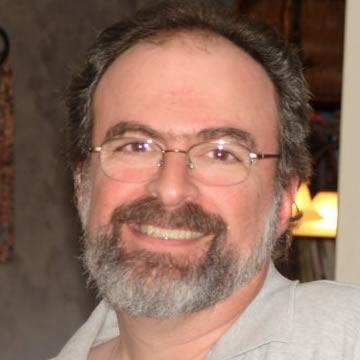 Dn. Jerome Atherholt